Reflections on Jesting: Showwomxn Spectacular
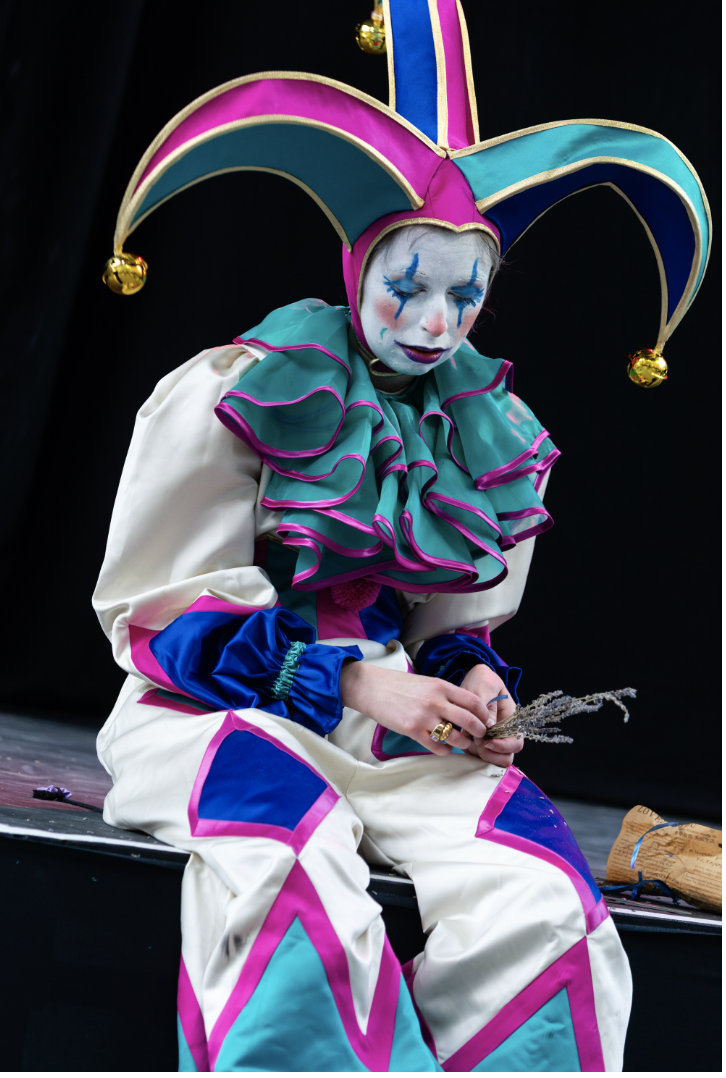
‘These Showwomen are not just for being looked at, they’re looking right back at you!’ These words from Ringmistress, Barker-extraordinaire Marisa Carnesky sent shivers from my belled hat to my clown-slippered toes. I’ve worked a lot of jobs in my life: bartender at Arsenal football stadium, refilling receipts at Betfred, scraping fake-blood off of theatre floors. Being a jester has always been a working-class occupation. Servanthood: trying to get make the crowd laugh by performing the manual labours of tripping, mimicking, double-taking. The clown exists in the void where performance and the crowd meet, throwing themselves in, time and again, allowing laughter to catch them or, more often than not, to fall to a silent, temporary death, only to spring back to attention, ready to try their best at the next ‘job’.
Marisa is interested in ‘onstage’ vs ‘offstage’: the real women, people, beasts, behind the sparkling ‘Showwoman’ personae. When she asked what my clown did ‘offstage’, my answer came immediately. They hustle. They do the jobs that support the performance. They do the jobs of my ancestors: servant, miner, factory-worker. And because they are a trickster, like all working-class, queer clowns, they do it with a wink. Selling lavender at an event where the audience has already paid: because they want the audience to be happy, (and perhaps they want a quick buck on the side).
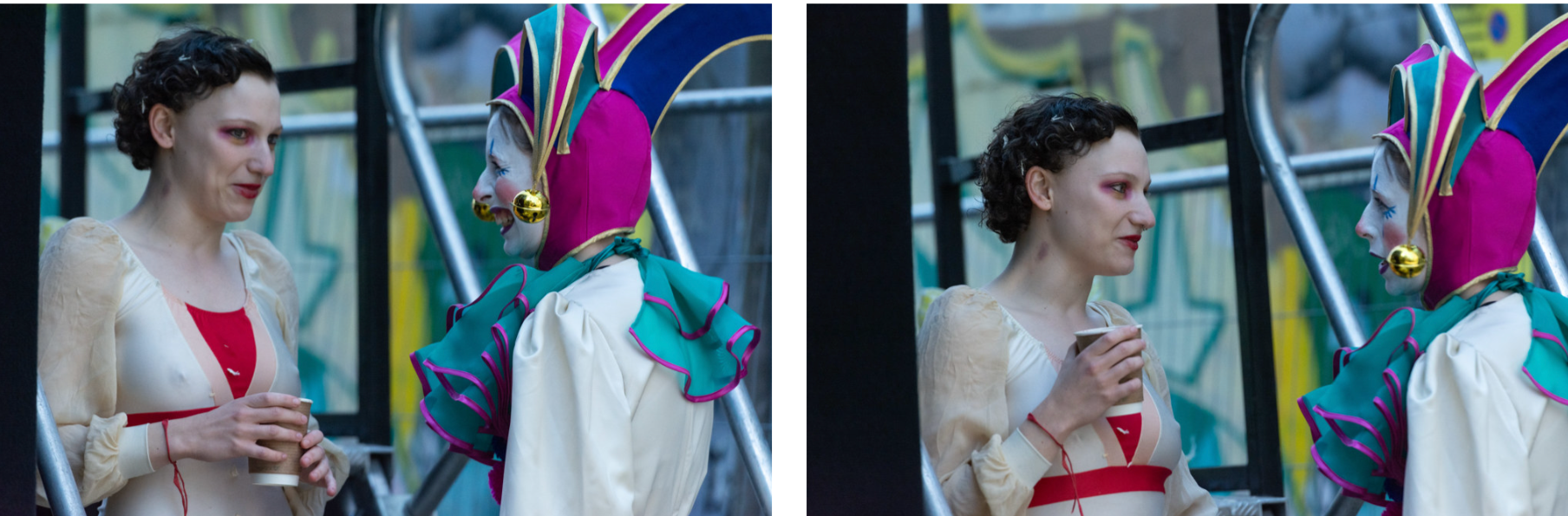
A clock was one of the only props on my stage: a reminder to the audience that I was on the clock, and that they were too. That their access to us was limited, and in a way, meaningful through that limitation. That we were keeping an eye on them too, on how much we could give them in that hour, on how much of us they were allowed. ‘They’re looking right back at you,’ warned Marisa, and at the end of that hour, as audience attention turned to the incredible aerial displays, without fail, we looked right at each other. Letting our gazes lift from our audiences to our fellow Showwomxn, shooting a smile, wiping away sweat, prizing themselves from beds of nails, or rubbing feet as they removed heeled rollerskates. A community. A family. A workforce.
Meg Hodgson, Summer 2025